
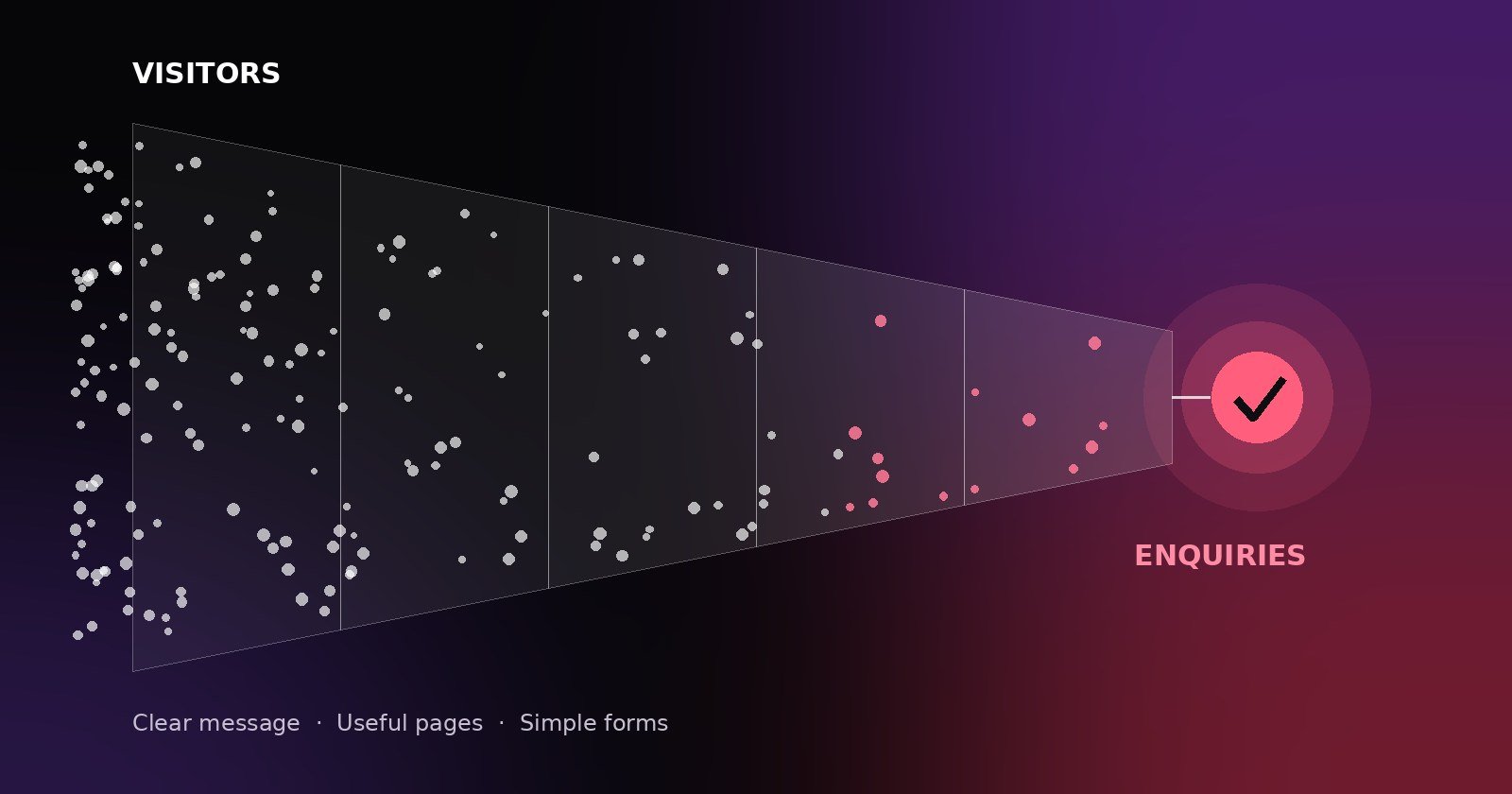
Why websites with traffic still miss enquiries
That’s a common problem every business owner faces. A website should do more than explain what a company offers. It should help potential customers understand the value of its products or services and make it easy for them to take the next step. When visitors leave without enquiring, businesses can miss opportunities even when their website receives regular traffic.
The solution is not always to spend more on advertising or publish more content. Sometimes, the website needs clearer messaging, more relevant information, a simpler enquiry process or a better way to attract the right audience.
In this guide, we explain how to generate leads from a website, improve the visitor experience and measure whether your efforts are producing useful business enquiries.
What Is Website Lead Generation?
Website lead generation is the process of turning website visitors into potential customers by encouraging them to take meaningful action.
Depending on the business, this action might include:
- Submitting an enquiry form.
- Requesting a quotation.
- Booking a consultation.
- Downloading a useful resource.
- Signing up for a newsletter.
- Contacting the business by email or telephone.
Not every visitor is ready to buy immediately. Some may be comparing providers, researching a problem or trying to understand which solution suits their needs.
An effective website helps visitors at different stages of their decision-making process. It provides useful information, builds confidence and offers a relevant next step.
The goal is not simply to collect more contact details. It is to attract people who are genuinely interested in what the business offers.
Why Is Your Website Not Generating Enough Leads?
Before making changes, identify what may be stopping visitors from enquiring. Here are five common issues and how to address them.
1. Unclear Website Messaging
Visitors should quickly understand what your business offers, who it serves and how it can help them.
What to improve: Use a clear headline, simple messaging and a relevant call to action.
2. Attracting the Wrong Audience
High traffic does not always mean more leads. Visitors may leave if your content does not match their needs.
What to improve: Align your keywords, campaigns and content with your target audience.
3. Unclear Calls to Action
Visitors may leave if they cannot easily find the next step.
What to improve: Use clear CTAs such as “Request a Quote” or “Contact Our Team”.
4. Complicated Enquiry Forms
Forms with too many fields can discourage potential customers from enquiring.
What to improve: Keep forms simple and request only the information you need.
5. Lack of Trust
Visitors may hesitate if they cannot find reliable information about your services or business.
What to improve: Provide clear service details, genuine testimonials where available, relevant work examples and accessible contact information.
8 Ways to Generate More Leads from Your Website
1. Understand Your Target Audience
Identify your ideal customers, their needs and the problems they want to solve. Use customer feedback, sales enquiries and website data to understand what information they need.
What to do: Create content and messaging that address your audience's specific challenges.
2. Improve Your Landing Pages
Landing pages should clearly explain your offer and guide visitors towards the next step. Direct visitors to relevant service pages instead of sending everyone to your homepage.
A good landing page includes:
- A clear headline and value proposition.
- Relevant service information.
- Answers to common customer questions.
- A visible call to action.
What to do: Keep each page focused on one main goal and make it easy for visitors to enquire.
3. Use SEO to Attract Relevant Visitors
Search engine optimization (SEO) helps potential customers discover your website through relevant searches.
What to do: Research relevant keywords, write descriptive titles and headings, link related pages, improve mobile usability and create content that answers customer questions. Avoid unnatural keyword repetition.
4. Publish Helpful, Relevant Content
Useful articles, guides, comparisons and case studies can help potential customers discover your business and understand your services.
What to do: Publish content that answers genuine customer questions and link naturally to relevant service pages. Give each article a clear purpose instead of publishing content just to increase page count.
5. Create Clear Calls to Action
Calls to action (CTAs) guide visitors towards their next step.
Examples include:
- Service pages: Request a Quote
- Blog articles: Explore Our Services
- Product pages: Ask About This Solution
- Contact pages: Send an Enquiry
What to do: Use clear, relevant CTAs and ensure each button leads to the promised destination.
6. Simplify Your Lead Capture Forms
Complicated forms can discourage visitors from enquiring.
What to do: Keep forms short, use clear labels, make them mobile-friendly and display a confirmation after successful submission. Ensure enquiries reach the right team for follow-up.
7. Improve Website Speed and Mobile Usability
Slow pages and difficult navigation can interrupt the visitor experience.
What to do: Optimise large images, reduce unnecessary scripts, fix broken links and check that buttons and forms work properly on mobile devices. Use PageSpeed Insights to identify performance issues.
8. Track Conversions and Improve Based on Data
Measure meaningful actions rather than focusing on website traffic alone.
Track metrics such as:
- Organic search clicks and impressions.
- Enquiry form submissions.
- Landing-page conversion rate.
- Number of qualified leads.
- Lead-to-customer conversion rate.
What to do: Use analytics and CRM data to identify which pages generate useful enquiries. Test improvements regularly and assess results using consistent measurements.
Which Website Improvements Should You Prioritise?
Not every improvement needs to happen at once. Start with the issue that most directly affects your visitors and business goals.
| Website issue | Recommended action | What to monitor |
|---|---|---|
| Visitors do not understand the offer | Clarify the headline and service messaging | Engagement with key service pages |
| Relevant pages receive little search traffic | Review keyword targeting and SEO | Organic clicks and impressions |
| Visitors read but do not enquire | Improve page relevance and CTA clarity | Enquiry conversion rate |
| Forms are difficult to complete | Remove unnecessary fields and test usability | Form completion and error rates |
| Mobile visitors struggle to navigate | Improve mobile layout and page performance | Mobile engagement and conversions |
| Enquiries arrive but are unsuitable | Refine audience targeting and qualification | Qualified leads and lead quality |
This comparison is a starting point, not a universal diagnosis. Review actual website behaviour and enquiry data before deciding which change deserves priority.
How to Measure Your Website Lead Generation Rate
The visitor-to-lead conversion rate shows the percentage of website visitors who become leads.
Formula:
Visitor-to-lead conversion rate = (Number of leads ÷ Number of website visitors) × 100
For example, if a website receives 2,000 visitors and generates 40 leads in a month, the conversion rate is 2%.
This is a hypothetical example, not an industry benchmark.
For accurate measurement, use the same method consistently and distinguish between total enquiries and qualified leads. Track conversion rates alongside lead quality to understand whether your website is attracting potential customers.
Common Website Lead Generation Mistakes to Avoid
Even well-maintained websites can miss opportunities when their lead generation process is not aligned with customer needs.
Use this checklist to identify areas where your website may be losing potential leads.
- Unclear website messaging.
- Attracting the wrong audience.
- Unclear calls to action.
- Complicated enquiry forms.
- Lack of trust signals.
Review your website against these points and prioritise the areas that need improvement. Track the results to understand which changes help generate more qualified leads.
Frequently Asked Questions
How can I generate more leads from my website?
Attract the right audience, improve key landing pages, use clear calls to action and simplify enquiry forms.
Does SEO help generate website leads?
Yes. SEO helps potential customers find your website through relevant searches. Useful content and clear next steps can turn that visibility into enquiries.
Do I need paid advertising to generate leads?
No. SEO, useful content, referrals and social media can attract potential customers. Paid ads are another option when targeting, budget and landing pages are well planned.
Should every website page have a contact form?
No. Give each important page a relevant next step. Service pages may need enquiry forms, while blog posts can direct readers to related services.
How often should I review website performance?
Review key metrics monthly, including website enquiries, qualified leads and conversion rates. Use the findings to prioritise improvements to your website and marketing activities.
Final Thoughts
Generating more website leads starts with attracting the right audience and making it easy for them to enquire. Focus on relevant SEO, clear messaging, simple forms and measurable improvements.
Looking to put these improvements into action? Explore Zywin Technologies digital marketing and SEO services to find ways to strengthen your website’s lead generation.